3DISCOVER / PRACTICAL GUIDE
Flexible 3D printed prototype: defining the test
Turn “it needs to feel soft” into a useful test: movement, assembly and the observations that guide the next revision.
By 3discover
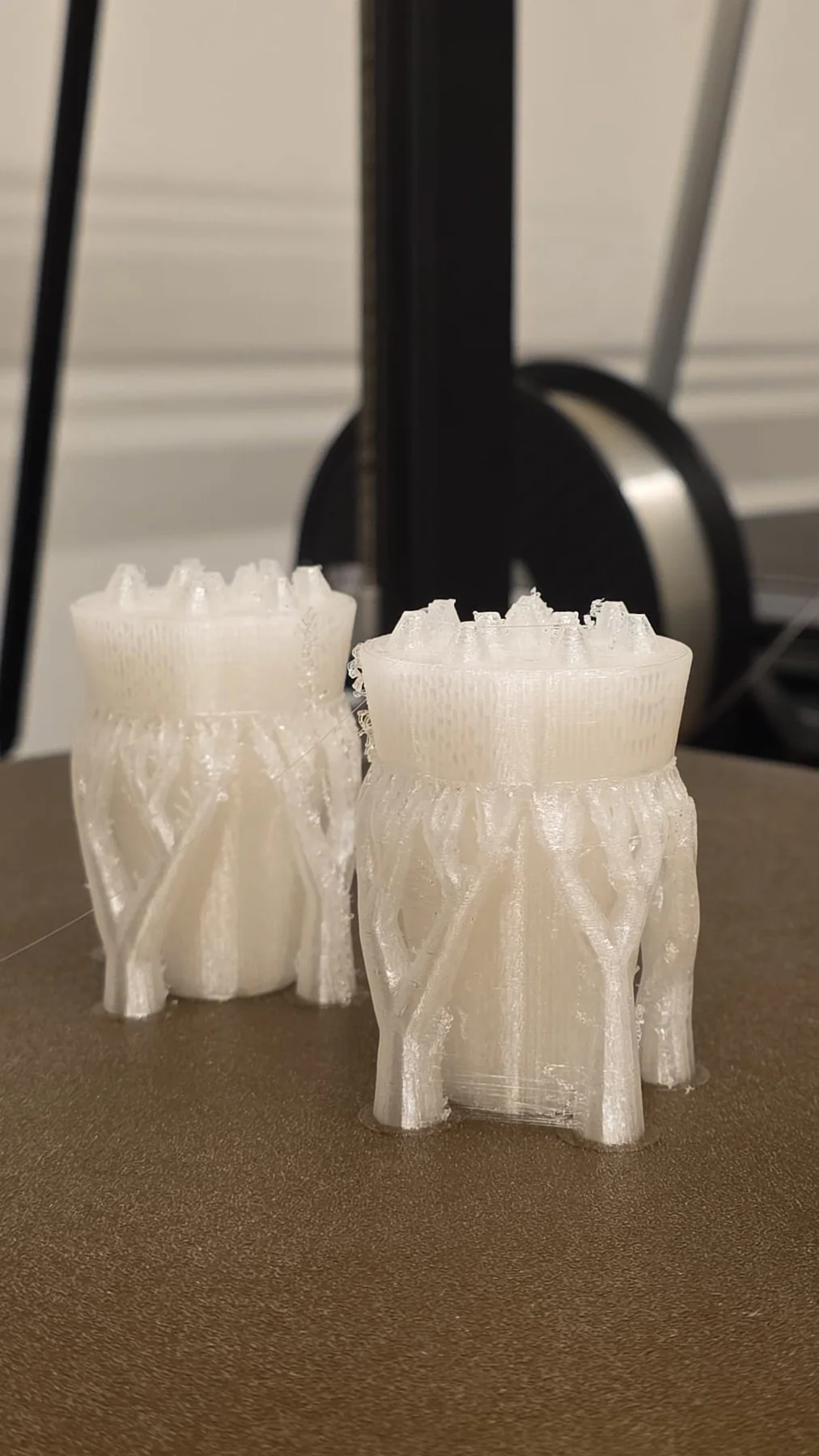
A flexible 3D printed prototype is useful when you need to understand how a component bends, compresses or fits another surface. To commission it, describe the movement and the decision you need to make before selecting a material. A part that feels soft does not automatically reproduce the behaviour of the final product.
3discover’s advanced prototyping service provides a starting point for discussing geometry, materials and the purpose of a sample. The appropriate process and required performance need project-specific review. Material and manufacturing choices are agreed during the technical assessment.
Describe what should deform and what should remain fixed
Identify flexible areas and mounting points in the brief. Explain whether the component should bend, compress, follow a profile or recover its shape after release. Include your available model and photographs of the assembly. The word “rubbery” alone cannot define the required function.
Explain what you need to learn: ease of insertion, freedom of movement or the difference between two geometries. If measurable values are needed, agree with the person designing the test how they will be defined and recorded.
Material hardness does not describe the whole part
Formlabs’ guidance on flexible components presents several routes, including direct printing and production using 3D printed moulds. These are technical alternatives to assess, not interchangeable processes or a list of services available from 3discover.
Geometry, thickness and manufacturing choices contribute to how a sample behaves. A material data sheet describes the material under its stated test conditions; it does not replace checking an assembled component. Ask which material and process are proposed, what finishing is needed and what differences will remain from the final version.
A useful test starts with the conditions of use
- Assembly: identify the support, constraints and contact surfaces.
- Movement: describe the direction and intended deformation, to be agreed with the designer.
- Environment: flag expected temperatures, contact with liquids or outdoor exposure.
- Repetition: clarify whether you are observing one assembly or a sequence of uses.
- Outcome: define what to record and which decision depends on the result.
An informal trial does not establish service life, sealing performance or certified suitability. Where an application has specific requirements, the project’s responsible team must define appropriate checks before final use.
Example: comparing two edge protectors
Hypothetical scenario: you want to compare two profiles for a flexible protector on an equipment edge. Keep the support, mounting section and insertion method consistent; change one geometry at a time. Record which version assembles as intended and where folds or interference occur.
The result helps choose the next revision. It does not prove the material will withstand every future condition. For a meaningful comparison, retain the sample identifier, file version, declared material and test conditions.
When to request a sample before the complete component
If the uncertainty concerns a local feature, discuss producing a representative section before the whole geometry. If the complete assembly determines deformation, an isolated section may not answer the question. The choice should follow what needs checking.
Ask for a proposal separating file preparation, sample production, finishing and further iterations. Quantity, cost and timing depend on the agreed work; they cannot be inferred from the label “flexible”.
Bring your design question to 3discover
Prepare a file or sketch, assembly context, required movement and the result you want to observe. Discuss your flexible prototype with us. If you have a physical component without a drawing, we can also discuss 3D capture and modelling services.